
Get a custom solar solution tailored to your power system requirements.
Designing Reliable Remote Power Systems That Don’t Fail
Today’s Design Challenges for Optimum Performance
In remote solar applications, reliability is not a nice-to-have. It is the requirement.
Whether you are powering SCADA equipment, pipeline monitoring, communications, or environmental sensors, the expectation is simple. The system works every day, in every season, without interruption.
That expectation comes down to one critical design metric: Loss of Load Probability (LOLP).
What is Loss of Load Probability?
Loss of Load Probability (LOLP) is the statistical likelihood that a system will fail to supply power to the load during a given period. In practical terms, it answers one question:
What are the chances this system will go down?
A system is considered to have a “loss of load” event when the battery drops below a safe state of charge, typically around 20 percent. At that point, the controller disconnects the load to prevent battery damage.
Why LOLP Matters in Remote Solar?
Most off-grid systems are deployed in places where failure is not acceptable.
- Pipeline monitoring and control
- Traffic and transportation systems
- Security and surveillance
- Environmental and weather monitoring
- Telecommunications infrastructure
In these environments, there is no grid backup. There is no quick service call. If the system goes down, the site goes dark.
LOLP gives engineers a way to quantify and design against that risk.
Designing for High Availability
- LOLP is directly tied to system availability.
- Low LOLP = High availability
- High LOLP = Increased risk of downtime
- Typical high-reliability designs target:
- Monthly LOLP: 0.01% or less
- Annual availability: ~99.97%
That level of performance equates to a potential loss of load only 3 times in over 27 years. That is the standard for mission-critical remote power.
What Impacts LOLP?
LOLP is not guesswork. It is driven by real system variables:
1. Solar Resource (Location & Weather): Solar production varies month to month. Winter and low-irradiance periods drive the highest risk.
2. Load Profile: Continuous loads, peak loads, and unexpected load creep all impact system performance.
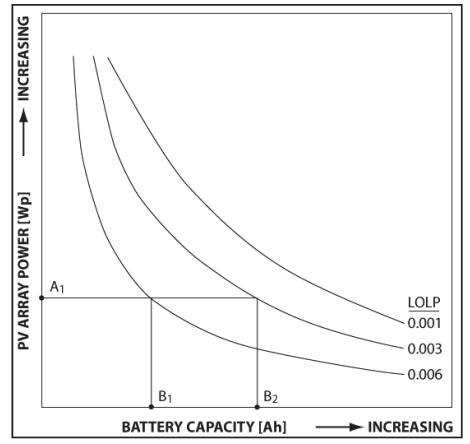
3. Battery Capacity: The battery provides autonomy during low-sun conditions. More capacity reduces risk.
4. PV Array Size: A larger array increases recharge capability and reduces recovery time after low production days.
These inputs are run through statistical models based on historical weather data to predict system performance over time.
How Engineers Reduce LOLP
There are only a few levers to pull, but they are powerful when used correctly.
Increase Battery Capacity: More storage means longer runtime during poor solar conditions.
Increase Solar Array Size: More generation improves recharge rates and reduces time spent in low state of charge.
Optimize Both Together: The most effective designs balance PV and battery to achieve target reliability without overspending.
For Example: Increasing battery capacity alone can cut LOLP in half, while combining battery and PV increases drives even greater improvements.
The Balance Between Cost and Reliability
Every system could be oversized to near-zero failure risk. That is not practical. The goal is to design to the right level of reliability for the application.
- Critical safety systems → ultra-low LOLP
- Monitoring systems → moderate LOLP acceptable
- Non-critical loads → cost-optimized designs
LOLP allows you to make that decision based on data, not assumptions.
LOLP in Real-World System Design
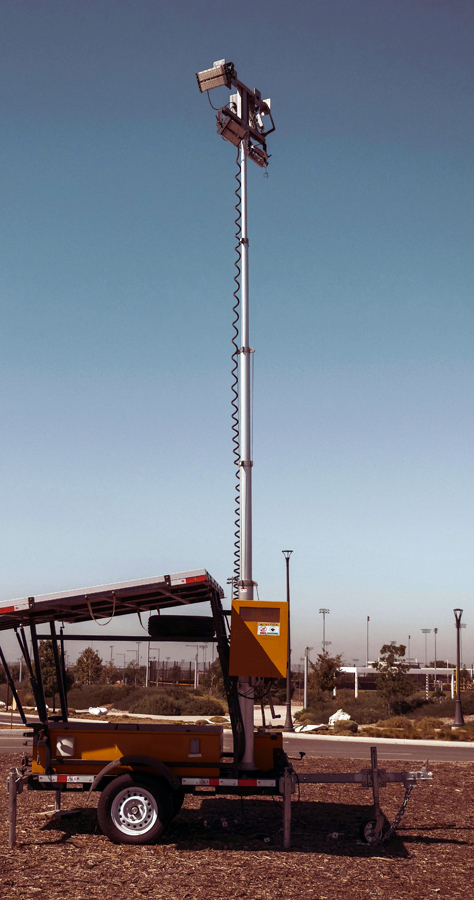
At SunWize, LOLP is not an academic exercise. It is a core part of how systems are engineered.
We model:
- Monthly solar variability
- Worst-case seasonal performance
- Battery depth of discharge limits
- Real-world load behavior
Then we adjust system sizing until the design meets the required availability target.
The result is a system that performs not just on paper, but in the field.
Reliable Power Starts with Proper Design
Reliable remote power comes down to two things:
- High-quality components
- Proper system design
LOLP is the tool that ensures the design side is done right.
Without it, systems are often undersized, leading to premature battery failure, downtime, and costly site visits.
With it, systems are built to deliver consistent, long-term performance.
Let’s Design It Right the First Time
If you are planning a remote solar deployment, the question is not just “Will it work?”... The question is: How often will it fail? We can help you answer that upfront and design accordingly.
Lets Get Started!
Why leave power reliability to chance? If your team needs a field-proven power solution, let’s talk.
cASE sTUDIES