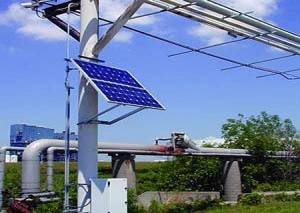



Get a custom solar solution tailored to your fire recognition system requirements.
Solar Power for Remote Wildfire Detection and Early Warning Systems
Today’s Challenges in Wildfire Detection
Wildfires are increasing in frequency, intensity, and geographic reach. As a result, early detection systems are becoming critical for utilities, municipalities, forestry agencies, and private landowners.
However, these systems are often deployed in remote, high-risk areas where grid power is unavailable or unreliable. Extending utility power into mountainous terrain, dense forests, or remote corridors is often impractical and cost prohibitive.
In addition, wildfire detection systems must operate continuously. Cameras, sensors, communication devices, and analytics platforms require 24/7 uptime, even during extreme heat, smoke conditions, and power outages.
Solar-powered systems provide a practical solution. By operating independently of the grid, they ensure continuous monitoring while reducing infrastructure costs and improving deployment flexibility.
SunWize Power & Battery designs industrial solar power systems specifically for remote instrumentation. Our solutions keep wildfire detection systems running reliably in the most demanding environments.
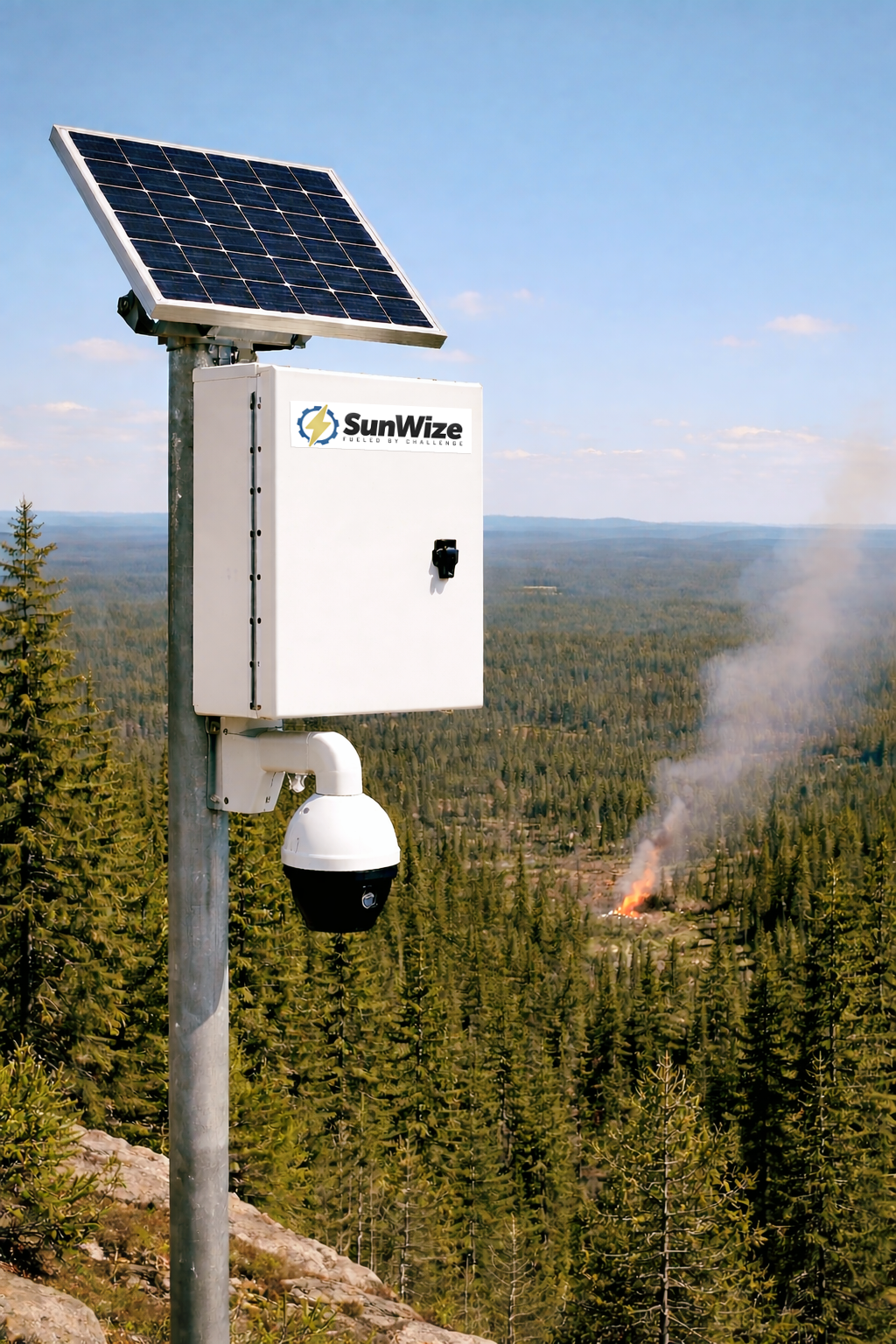
What Can Solar Power for Wildfire Detection Systems Support?
Remote power systems integrate solar panels, battery storage, and advanced controls to deliver reliable energy for wildfire monitoring equipment in off-grid locations.
These systems can support a wide range of wildfire detection technologies, including:
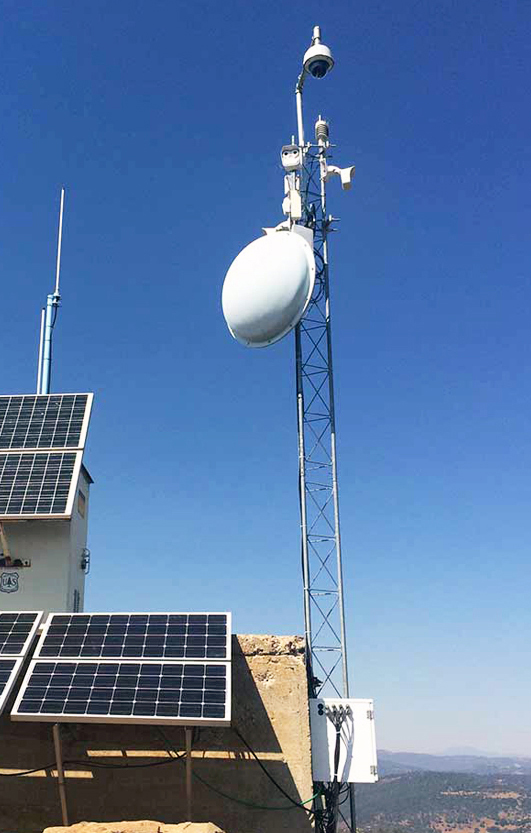
Applications for Solar Wildfire Detection Systems
SunWize Power & Battery systems are designed for critical outdoor applications where early detection and rapid response are essential.
Typical wildfire detection deployments include:
- Utility Infrastructure Monitoring
Transmission lines and substations in wildfire-prone regions - Forestry & Land Management
National forests, state parks, and protected lands - Remote Mountain & Rural Monitoring
High-elevation and hard-to-access locations - Rail & Transportation Corridors
Early detection along rail lines and highways - Oil & Gas / Industrial Sites
Monitoring flare zones, pipelines, and remote assets - Community Wildfire Protection Systems
Perimeter monitoring around towns and critical infrastructure
Because these systems operate in remote and often unmanned environments, maintaining continuous power is critical to ensuring early detection and reducing response times.
Advantages of Solar Power for Wildfire Detection
In many wildfire-prone areas, solar power is the most cost-effective and reliable way to deploy detection systems. Extending grid power can be expensive and time-consuming, especially in rugged terrain.
Solar-powered systems eliminate these challenges while improving reliability and resilience.
Key advantages include:
- 24/7 Autonomous Operation
Continuous monitoring without reliance on the grid - Extended Battery Backup
Systems can deliver multiple days of autonomy during low sunlight conditions - Resilience During Power Outages
Critical systems remain operational during wildfire-related grid failures - Reduced Infrastructure Costs
Eliminates trenching, wiring, and utility coordination - Rapid Deployment in Remote Areas
Ideal for temporary or permanent wildfire monitoring installations - Custom-Engineered System Design
Each system is tailored to your load profile, environment, and autonomy requirements
Lets Get Started!
Why leave power reliability to chance? If your team needs a field-proven power solution, let’s talk.
cASE sTUDIES