
Every truck roll has a cost. Contact SunWize to discover how reliable remote power systems can reduce site visits and lower your operating expenses.
The Real Cost of a Truck Roll
Why Reducing Truck Rolls Matters
When evaluating remote monitoring, SCADA, communications, and control systems, many organizations focus on the initial cost of equipment. However, one of the largest ongoing expenses is often overlooked: the truck roll.
A truck roll is more than simply sending a technician to a site. It includes labor, fuel, vehicle wear and tear, travel time, scheduling, safety requirements, and often the lost productivity associated with pulling skilled personnel away from other tasks.
For organizations managing dozens, hundreds, or even thousands of remote assets, these costs add up quickly.
What Does a Truck Roll Really Cost?
The answer varies by industry and location, but a single service visit can easily cost hundreds of dollars. For remote oil and gas sites, utility infrastructure, environmental monitoring stations, or communications equipment located hours from the nearest service center, the cost can climb significantly higher.
Now multiply that by multiple visits per year across an entire fleet of assets.
Suddenly, reducing even a handful of site visits can have a meaningful impact on operating expenses.
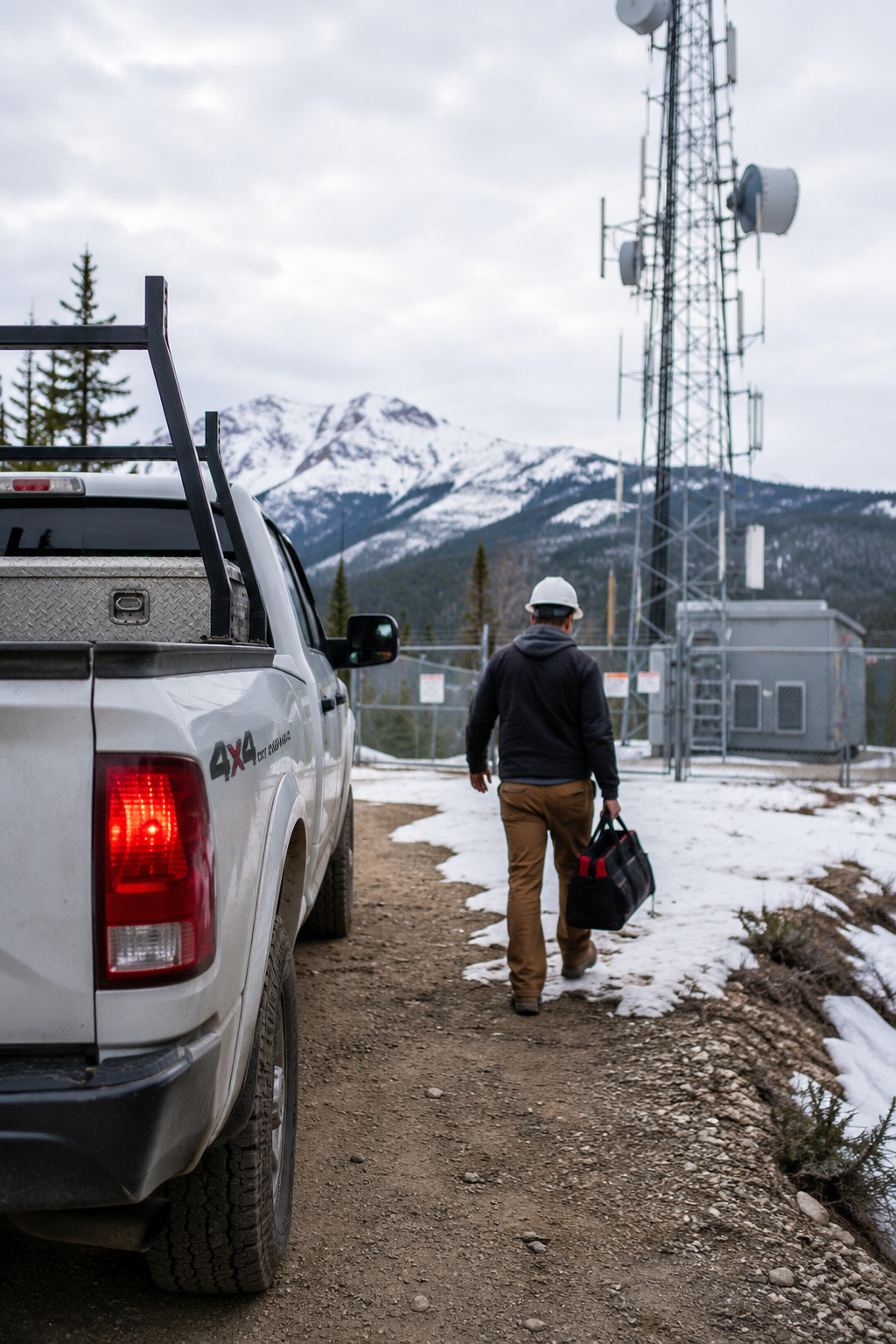
Why Do Remote Sites Require Service Visits?
Many truck rolls are triggered by preventable issues such as:
- Battery failures
- Under-sized solar power systems
- Insufficient battery autonomy
- Charge controller faults
- Loss of communications
- Seasonal changes in available solar energy
- Aging equipment reaching end of life
In many cases, the monitored equipment itself is functioning properly. The problem is that the power system supporting it is no longer able to provide reliable operation.
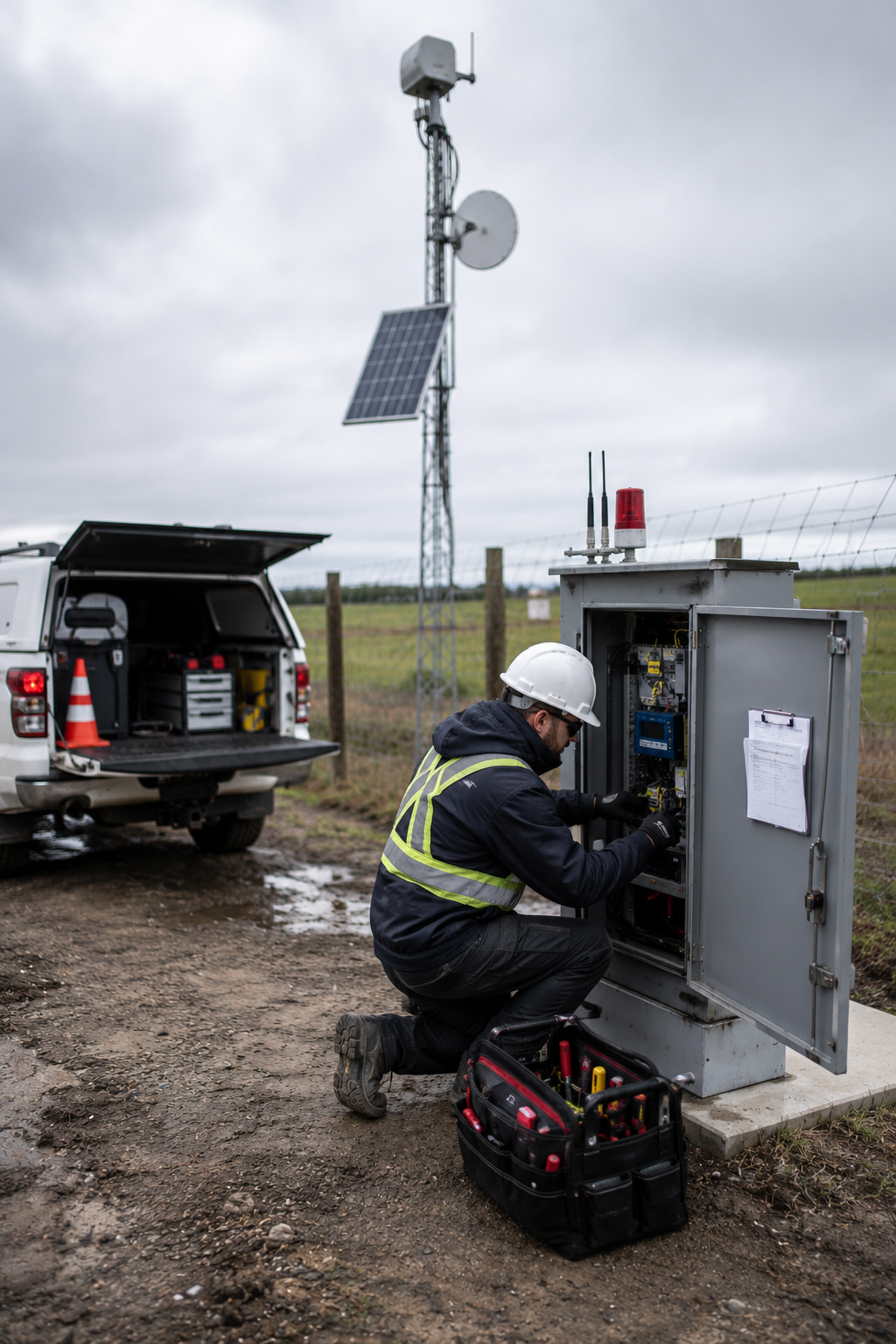
Reliability Starts With Proper Power Design
One of the most effective ways to reduce service visits is to design remote power systems with reliability in mind from the beginning.
This includes:
- Proper solar sizing for the site's location
- Adequate battery capacity and autonomy
- Consideration for winter conditions and reduced sunlight
- Industrial-grade components designed for long service life
- Remote monitoring capabilities that provide visibility before failures occur
A well-designed system can often operate for years with minimal maintenance while providing continuous power to critical equipment.
The Cost of Prevention Is Usually Lower Than the Cost of Response
Many organizations evaluate power systems based solely on initial purchase price. However, the lowest-cost system is not always the lowest-cost solution.
When a power failure results in lost data, interrupted communications, emergency service calls, or repeated truck rolls, the true lifecycle cost becomes much higher than anticipated.
Investing in a properly engineered remote power solution can significantly reduce maintenance requirements while improving system uptime and operational confidence.
Looking Beyond the Equipment
At SunWize, we've spent decades powering remote industrial applications across oil and gas, utilities, transportation, environmental monitoring, telecommunications, security, and automation markets.
The goal is not simply to deploy a solar power system.
The goal is to keep critical equipment operating reliably while minimizing the need for costly site visits.
Because sometimes the most expensive part of a remote system isn't the equipment itself.
It's the truck roll required to keep it running.
Need help evaluating a remote power application?
Contact the SunWize team to discuss ways to improve reliability, increase autonomy, and reduce maintenance costs across your remote infrastructure.
Applications Across Industries
Skid-mounted solar is already being deployed across a wide range of industries where non-invasive installation is critical:
- Oil and gas monitoring and control sites
- Utility and pipeline SCADA systems
- Environmental and weather monitoring
- Emergency and rapid response deployments
- Temporary infrastructure and pilot projects
In each case, the ability to deploy quickly without disturbing the ground provides a clear operational advantage.
A Practical Alternative to Traditional Mounting
As site restrictions become more common, the need for adaptable installation methods continues to grow.
Skid-mounted solar systems offer a straightforward solution. They eliminate the need for ground penetration, reduce installation time, and maintain the reliability required for remote power applications.
For projects where traditional mounting is not feasible, skid-based platforms are not a workaround. They are a purpose-built solution designed for real-world constraints.
Looking Ahead
As remote infrastructure continues to expand, reducing operating costs and improving reliability will become even more important. For organizations managing remote SCADA systems, communications equipment, environmental monitoring stations, and security applications, minimizing truck rolls is a key part of that equation.
The most successful remote power systems are not judged solely by their initial cost, but by their ability to reduce maintenance visits, improve uptime, and keep critical equipment operating reliably for years.
As labor and travel costs continue to rise, designing for reliability and autonomy is becoming less of an advantage and more of a necessity.
Lets Get Started!
Why leave power reliability to chance? If your team needs a field-proven power solution, let’s talk.
cASE sTUDIES