

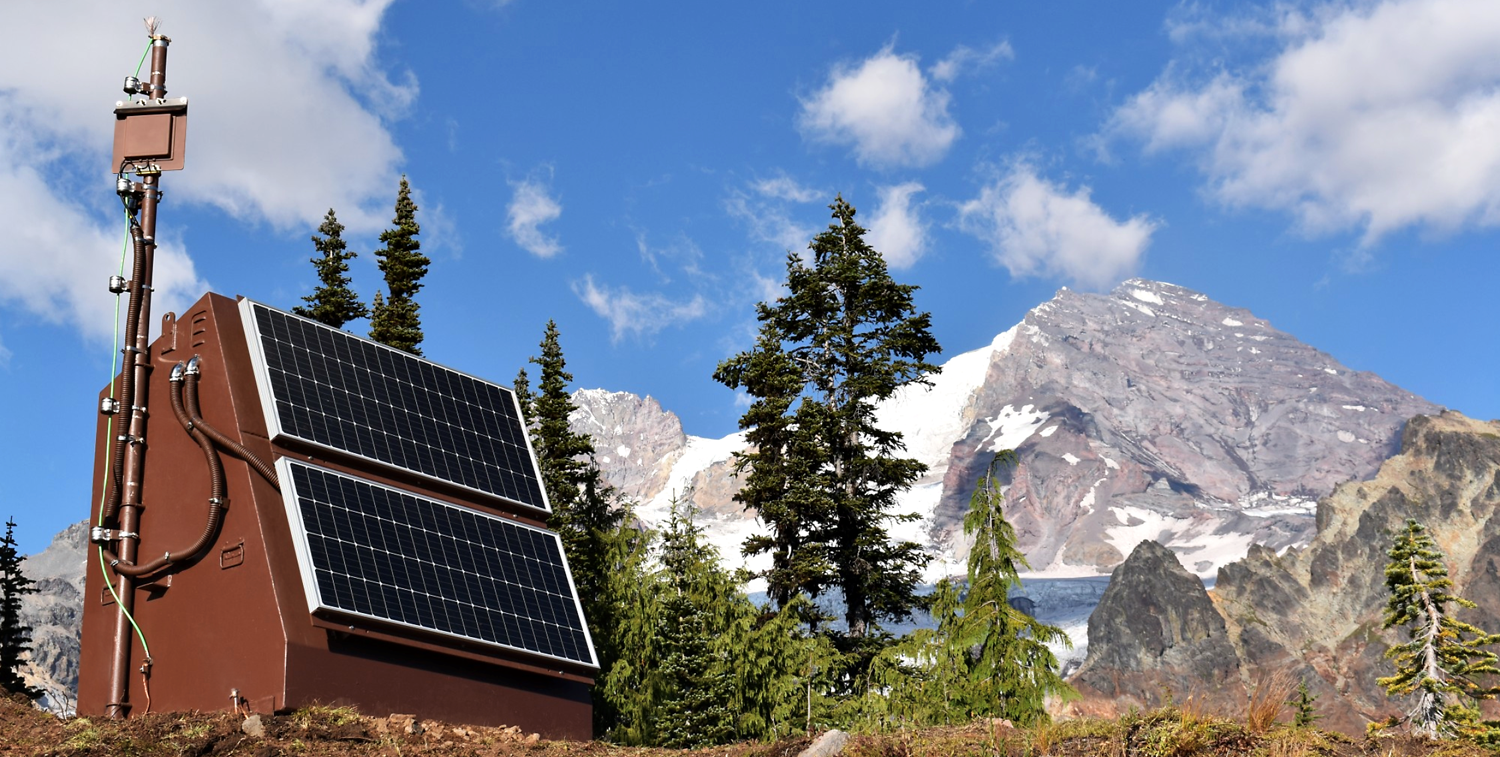
Designing Solar Power Systems for Extreme Weather and High-Elevation Terrain
Remote monitoring systems are often installed where grid power does not exist. Seismic monitoring networks, environmental sensors, and research equipment are frequently deployed on mountain ridges and high-elevation terrain where weather conditions are severe.
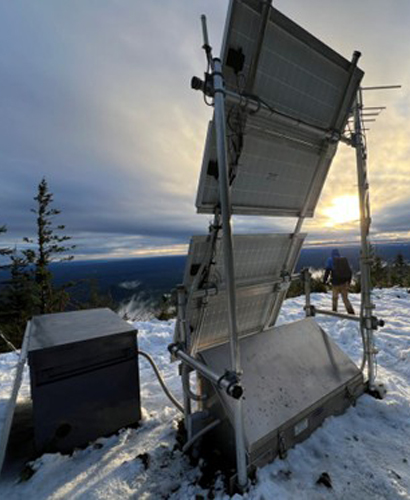
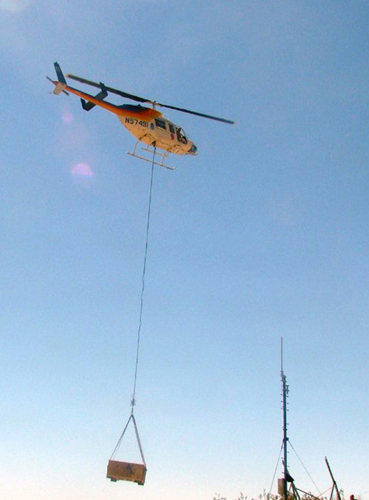
In these environments, solar systems must operate through heavy snow, strong winds, freezing temperatures, and long periods of limited winter sunlight. Logistics installation can be just as challenging. Equipment is often transported by helicopter to staging areas before crews hike miles through rugged terrain to reach the final site.
Because access is difficult and conditions can change quickly, installation teams aim to complete the entire deployment within a single day. If the work runs longer, crews may be forced to camp overnight in extremely inhospitable environments. These constraints require power systems that are rugged, compact, and designed for rapid installation.
A Solar Enclosure Designed for High-Elevation Seismic Monitoring
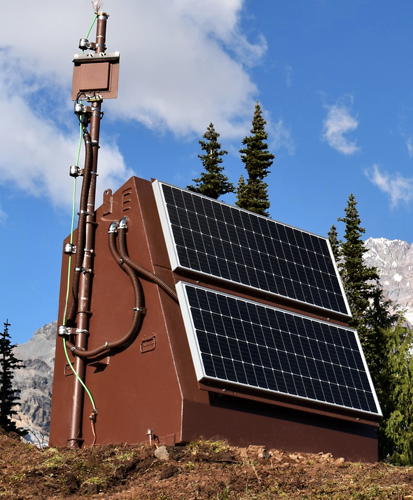
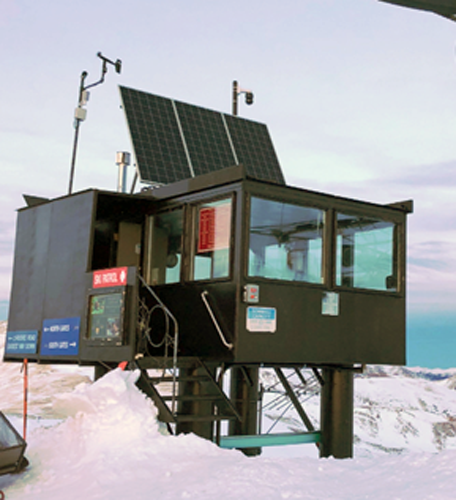
The enclosure shown to the left was developed specifically for seismic monitoring deployments in harsh mountain environments.
Rather than assembling separate solar panels, racks, batteries, and electronics in the field, the system integrates the core components of the solar power platform into a single enclosure. Solar modules are mounted directly to the structure while the batteries, charge controller, and electronics are protected inside.
Key design advantages include:
Snow-shedding geometry
The angled structure helps snow slide off the solar modules, improving winter energy production while reducing structural stress.
Structural durability
The enclosure is designed to withstand heavy snow loads and strong winds commonly found on exposed mountain ridges.
Integrated power system
Solar modules, battery storage, and charge control electronics are consolidated into one platform, minimizing field assembly.
Built for Harsh Winter Conditions
Remote solar systems in alpine environments must continue operating through extended snow and ice conditions.
The triangular enclosure provides structural strength while promoting effective snow shedding. Its sealed, partially buried configuration protects the battery system and electronics from moisture, extreme cold, and wind exposure.
Systems deployed in these environments must also address several additional design factors:
- Cold-temperature battery performance
- Moisture protection and enclosure sealing
- Wind loading on exposed terrain
- Reduced winter solar availability
Designing the enclosure and power system together allows the overall platform to perform reliably where traditional solar installations might struggle.
Installation in Remote Mountain Terrain
Remote monitoring deployments require efficient installation procedures. Equipment is often transported by helicopter to a nearby staging location before crews carry the system to the final monitoring site.
Field teams often face:
- Long hikes to the deployment location
- Limited daylight hours
- Rapidly changing weather conditions
- Difficult terrain
Integrated solar enclosures significantly simplify the process by reducing the number of components that must be assembled in the field. Once the enclosure is positioned and secured, crews can connect the seismic sensors, communications equipment, and data loggers required for the station.
Engineering for Long-Term Reliability
Once deployed, many remote monitoring stations remain unattended for extended periods. Seasonal snowpack, rugged terrain, and weather conditions can make routine maintenance difficult or impossible.
For this reason, remote solar power systems must be designed with long-term reliability in mind.
Key engineering considerations include:
- Solar arrays sized for seasonal solar variation
- Battery systems capable of operating in cold climates
- Rugged enclosures that protect electronics from snow, moisture, and wind
- Compact designs that minimize wind loading and simplify installation
When these design principles are applied, remote solar systems can operate reliably for years while supporting critical monitoring infrastructure.
Lets Get Started!
Why leave power reliability to chance? If your team needs a field-proven power solution, let’s talk.